

The Web Became Disconnected
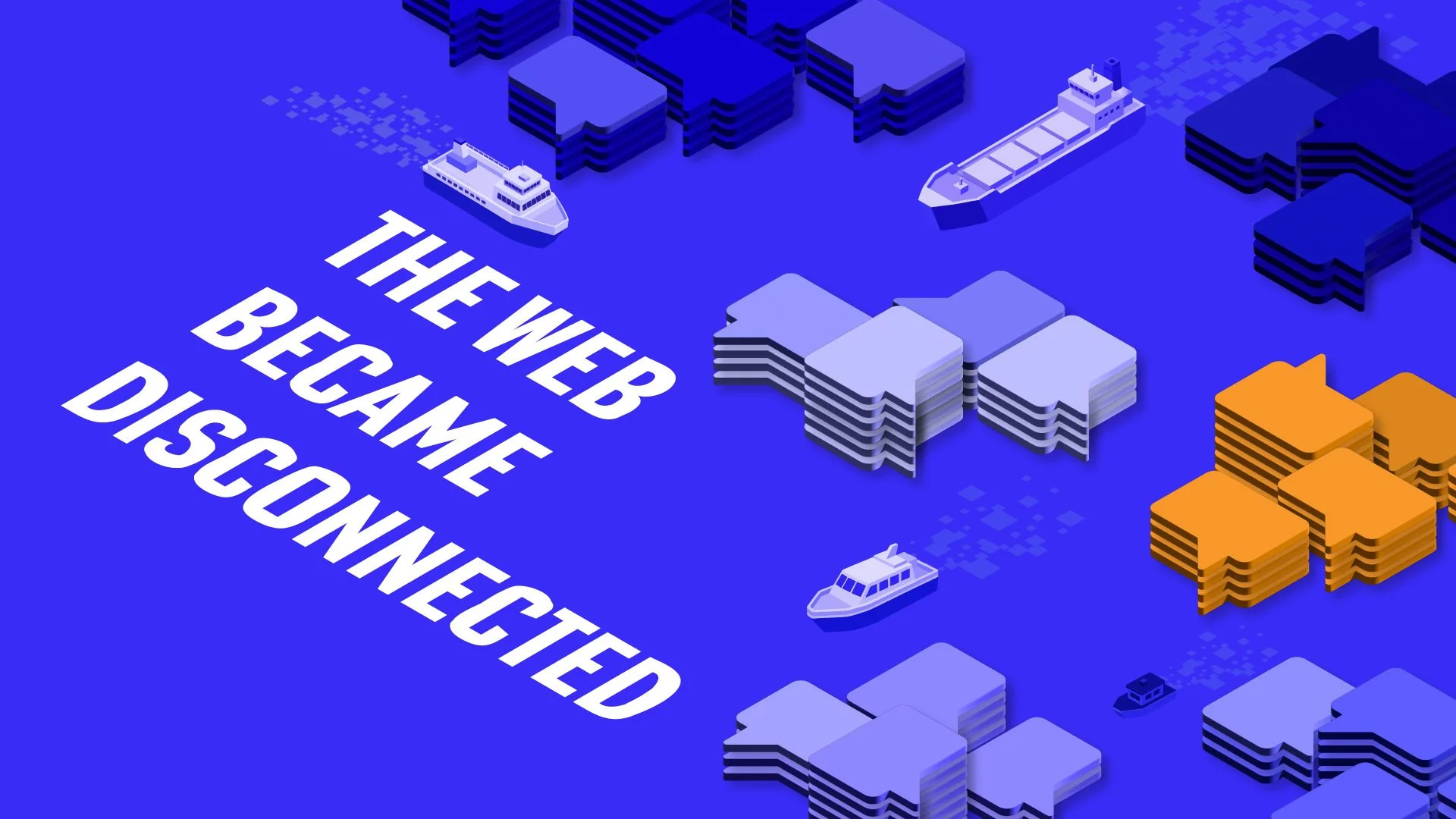
I've been thinking a lot recently about what happened to the internet. Not the technology. The internet itself. The thing many of us grew up with. The internet I remember felt different. It felt open, unpredictable, alive and free.
Although you needed to dial up and images took forever to load, the web felt like new territory that rewarded commitment and curiosity. It rewarded exploration.
The web was designed around links. Those links connected pages, ideas and, ultimately, people. That is what encouraged the participation that created the original internet. People created full websites with links to each other, not just posts on a social media site with no links.
Everyone could publish. Everyone could respond. Everyone could create something. Nobody had figured out how to make money from it, so most were just doing it for the community and enjoyment.
You would stumble across someone's personal website. A blog written by an expert nobody had heard of. A discussion forum filled with people who knew more about a niche topic than any journalist. Some of it was truly terrible, but others led to a fascinating corner of the web.
The web wasn't built around followers and audiences. It was built around people participating on the web itself. For all its flaws and poor early attempts at messaging apps, there was something deeply democratic about that.
Over time, the centre of gravity shifted. The web became dominated by platforms. Google became the gateway to much of the web. Social networks became the gateway to much of the conversation. Both relied on closed algorithms that increasingly determined what billions of people would and would not discover. Open exploration gave way to algorithmic feeds. Communities became audiences. Participants became users, or worse, marketing 'eyeballs'.
The internet has increasingly shifted from a place you freely explored to one that is curated and presented to you. And as that happened, something important was lost.
The URL remains the fundamental building block of the web. As far as the internet is concerned, every web page is equal. It doesn't matter whether a page belongs to The New York Times, a Fortune 500 company or a PhD student. They are all first-class citizens of the web.
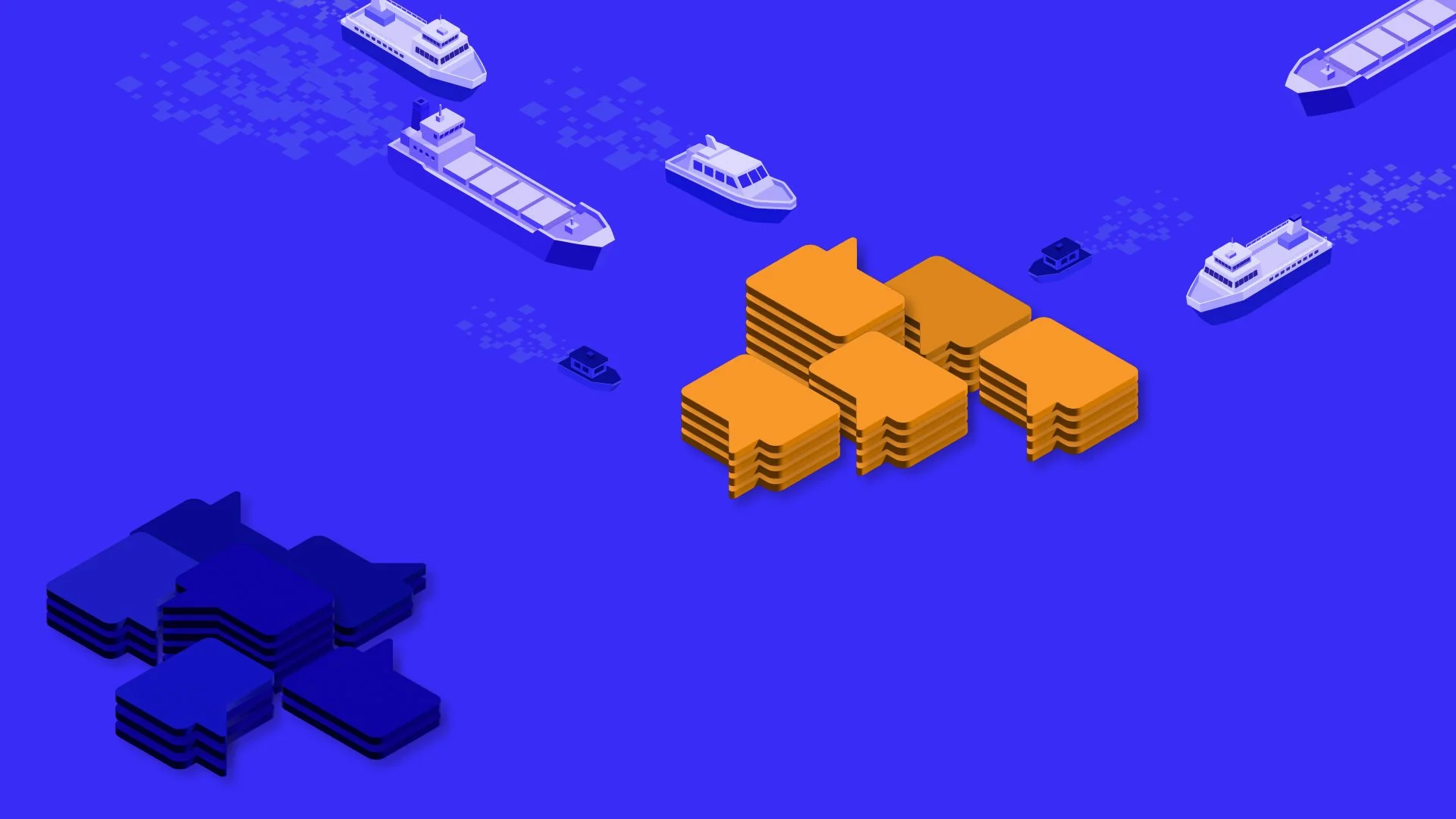
Discovery became engagement-driven.
Much of the discovery on the web has been delegated to opaque algorithms and feeds. Feeds are obviously useful in connecting common topics and interests, but they have also changed the incentives. Most, if not all, are optimised to maximise engagement rather than knowledge or curiosity. The ‘like and share’ culture dominated, where clicks were the currency and connecting people became secondary. The content that spreads furthest is often not the most insightful, informative or original. It is simply the most effective at capturing attention. Somewhere between the chase for 'going viral' and the commercialisation of attention, the web lost much of its original promise as a place for open connection and shared knowledge. It's lost its way, and so we as humans are losing out on a global community of shared learning.
As a result, some of the best material on the internet remains buried. There are independent writers and researchers producing remarkable work, experts sharing decades of knowledge, small communities having incredibly thoughtful discussions, and niche websites dedicated to fascinating subjects most people have never seen or heard of. If they are listed beyond the first couple of pages of search results, who will see them? AI agents ingesting the entire web will read and train their models on them so that they can regurgitate the information in ‘AI summaries’, but will humans ever see and read the pages?
The internet contains more knowledge, expertise, and insight than any information system in human history. Yet discovering that knowledge often feels harder than it should be. I don't think the internet needs more content. If anything, we are drowning in content. What we need are better ways to find the signal amongst the noise, especially around topics of interest to us.
We need discovery systems that reward passion and curiosity rather than addiction, depth rather than virality, and genuine insight rather than mere engagement. The open web solved the publishing problem a long time ago, allowing anyone to put content online. The challenge now is helping people discover the most interesting things already published.
What makes the web extraordinary isn't simply the amount of information it contains. It's the possibility that millions of people, each with different experiences and expertise, can collectively build something greater than any one individual could create alone. Every article, every discussion, every correction, every link and every challenge adds another layer to humanity's shared knowledge. The web is at its best when that collective intelligence is visible, connected and continually improving.
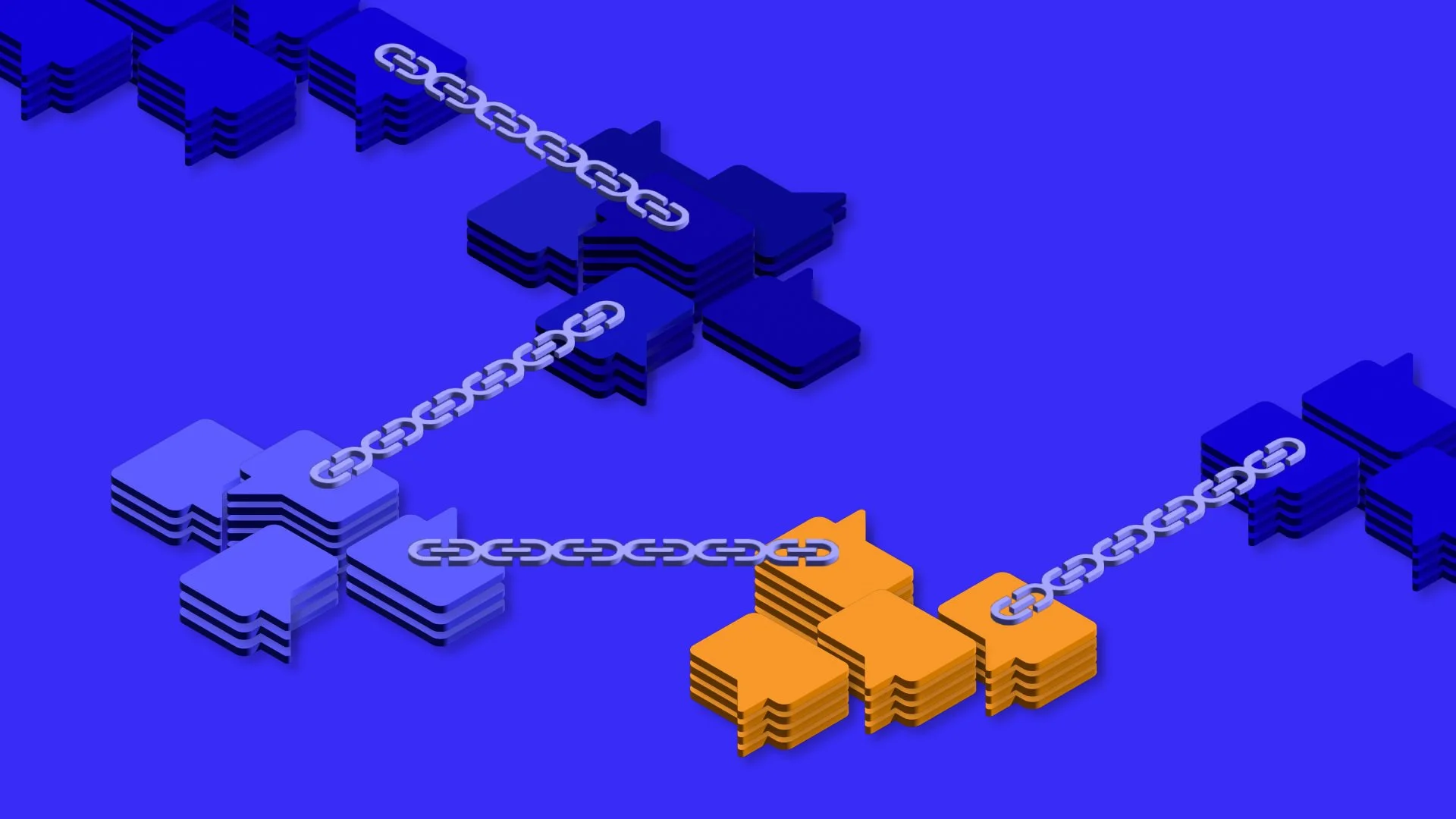
Conversation became detached from the web pages themselves.
For a long period, much of the web had facilitated participation and conversation. Articles had comments. Blog posts had comments. News sites had comments. And despite their imperfections, the comments were often the most interesting part of the webpage.
Experts expressed their opinions and corrected mistakes. Readers added context and counter-arguments. People surfaced sources the author had missed. Witnesses contributed first-hand knowledge. People challenged assumptions.
The article contained one perspective. The discussion contained dozens. The page became smarter than the author. Sometimes dramatically so.
Then, one by one, comment sections disappeared. Web publishers outsourced their own conversations to the social networks. The discussion didn't disappear. It simply became disconnected from the source.
Today, when I read an article, watch a video, browse a product, research a company, or investigate a topic, I often find myself wondering:
Does the writer really believe this, or are they just toeing the party line?
What do people really think about this?
Where can I find more conversation on this topic?
I am looking for the collective intelligence of people I trust. People who have seen the same thing, thought about the same thing, researched the same thing, and disagreed with the same thing.
The discussion exists. It is scattered across social networks. Hidden inside messaging platforms. Fragmented across countless disconnected places. The web simply doesn't know where to find it. That feels like a missed opportunity.
We've become increasingly polarised and uncomfortable with disagreement.
Many online spaces seem to optimise for affirmation rather than challenge. For consensus rather than scrutiny. For performance rather than truth.
The most important advances in human knowledge have always emerged from the openness of ideas and the freedom to challenge them. Science advances through challenge. Engineering advances through challenge. Markets advance through challenge. Democracy advances through challenge. The web advanced through challenge.
No institution should be beyond criticism. No authority should be beyond questioning. No idea should be protected from scrutiny. Truth does not emerge from protection. It emerges from challenge.
Good ideas become stronger when challenged. Weak ideas become weaker.
That process is not always comfortable. But it is one of the most powerful mechanisms humanity has ever invented for discovering truth.
The internet was at its best when ideas competed openly. When anyone could contribute. When anyone could respond. When anyone could challenge. When anyone could learn. We need to relearn how to embrace disagreement, not avoid it. The web should not pretend to deliver a single approved truth. It should help people think, question, challenge, and grow.
The web was never supposed to be a spectator sport. No gatekeepers. No digital aristocracy setting the narrative. We are all free participants.
I believe there is still enormous value in the original promise of the internet.
I don't believe the current state of the internet is inevitable. I don't think the future has to be a handful of platforms competing for attention while the rest of the web becomes increasingly weak and irrelevant.
Open links. Open participation. Open discovery. Open discussion.
The web can again be a place where every person has an equal voice. A place where ideas compete openly. A place where knowledge compounds. A place where the conversation lives with the thing being discussed.
The web is one of humanity's greatest inventions. It deserves better than becoming a collection of walled gardens optimised for engagement.
It deserves to become richer. Deeper. More participatory. More intelligent. More human.
The goal of the internet was never simply to connect content. It was to connect people. People with shared interests, passions, questions and knowledge.
We need a web where people are free to follow their own curiosity, not simply be fed what an algorithm selects or a platform controls. Open access, open discussion and open learning may not always be perfect, but they are how we grow as individuals and as a society.
That's a problem I've become increasingly obsessed with. I don't think the web needs another destination. I think it needs to become a community again. It needs to reconnect its pages, its conversations and the collective intelligence that emerges between them.
That's why a small team and I have spent the last year building something new.
More on that soon.